
Top Jordan Kicks for Court Performance on the Court
Regarding basketball performance shoes, Jordan Brand exists at a special crossroads between history and innovation. The company built its name on Michael Jordan’s six championship wins, and in 2026 it still manages to outfit NBA athletes while supporting countless numbers of recreational hoopers who expect genuine on-court performance. But here’s the challenge: with over 40 mainline silhouettes and scores of sub-models, figuring out which Jordans actually deliver on the court requires real research. Not every Jordan is made for basketball anymore — heritage models from the ’80s and ’90s are missing up-to-date cushioning, while recent signature lines offer cutting-edge cushioning and support that compete with anything available. This guide reviews the top Jordan sneakers for basketball performance in 2026, assessing each across impact absorption, traction, stability, mass, and court feel.
What Makes a Elite Basketball Shoe in 2026
The modern game of basketball calls for all-direction agility — bursts of speed, lateral shuffles, sudden stops, vertical jumps — and cushioning must handle landings without sacrificing court feel. Outsole grip is possibly the most crucial factor, because a shoe that slides on dirty courts is genuinely hazardous, elevating likelihood of rolled ankles and knee problems. Support includes external structures like outriggers and heel cups plus the shoe’s ability to secure your foot during hard direction changes. Overall mass has emerged as vital as the game speeds up, with elite guards preferring shoes under 14 ounces while big men allow up to 16 for extra ankle support. Breathability prevents excessive warmth that degrades grip and comfort during extended games. The perfect sneaker blends all five factors without significantly compromising any particular one.
Air Jordan 38: The Flagship Performer
The Air Jordan 38 stands as the pinnacle of Jordan Brand’s order now performance engineering, pairing Formula 23 foam with a heel-to-toe Zoom Air Strobel that delivers an outstandingly responsive ride. At 13.8 ounces in a men’s size 10, it combines lightweight agility with padding that shields knees and ankles during explosive play. The woven Jacquard upper supported with Flywire cables keeps the foot down during defensive slides while keeping airy for four-quarter matchups. Court grip is outstanding — the herringbone outsole holds both clean and dusty courts with confidence, and the rubber compound holds up for a whole amateur season of 3-4 games per week. The midfoot plate gives torsional stability during crossover dribbles and defensive shuffles. At $200 retail price, it goes head-to-head with the LeBron 22 and provides what many testers label the best Jordan playing experience since the Jordan 28.
Jordan Tatum 3: Premier Affordable Basketball Shoe
Jayson Tatum’s third signature shoe has risen as the universally acknowledged best-value basketball shoe of 2026, providing high-level on-court capability at $130. The React foam midsole with forefoot Zoom Air provides all-day support while offering spring for powerful initial bursts and layups. At 12.9 ounces, it’s one of the most lightweight performance shoes on the market, excellently tailored for backcourt players and wing players valuing agility. The engineered mesh upper shapes to the foot after minimal adjustment, and the interior heel structure holds the ankle without hindering range of motion. Grip uses generously spaced herringbone grooves that direct dust away, maintaining court bite on poorly maintained courts. Various NBA athletes beyond Tatum have been observed wearing it in games — the ultimate proof of on-court quality.
Air Jordan 37: The Complete Court Shoe
While technically previous-generation, the AJ37 is still commonly in stock at marked-down costs and still stacks up with this year’s releases. The Lenoweave upper is at the same time featherweight, airy, and supportive — a textile advance influencing Jordan’s entire court shoe range. Dual-stacked Zoom Air in forefoot and heel provides on-court sensation impressively close to natural while delivering meaningful impact protection. At 14.1 ounces, it’s a bit heavier than the Tatum 3 but compensates with better ankle stability from its higher collar height and Flywire system, which makes it great for bigs and big men. The outsole grip is among the most tenacious in the range, with pronounced grooves that bite even during explosive direction changes. Originally $185, it now goes for $120–$140 — quite possibly the greatest performance-to-price ratio in Jordan’s catalog.
Jordan Luka 3: Engineered for Savvy Floor Generals
The Luka 3, designed for Luka Dončić’s finesse-oriented playing style, is tailored for players who rely on footwork and body control over sheer speed. The heel-to-toe Zoom Strobel rests directly beneath the foot, generating a low-to-ground sensation that enhances balance during step-back shots and Euro-steps. The broad foundation and enlarged outrigger deliver balance among the strongest in Jordan’s lineup, making it suited for larger athletes or those with weak ankles. Outsole traction uses a circular pattern supporting pivot moves and spins at the heart of Dončić’s game, although traction decreases slightly on heavily dusty floors. At $140 with wide sizing up to 18, it’s accessible to big men who have difficulty getting basketball shoes in their size. For any player prioritizing finesse over sheer quickness, the Luka 3 delivers at what it’s built to do.
| Model | Price | Weight (Size 10) | Cushioning | Best Position | Rating |
|---|---|---|---|---|---|
| Air Jordan 38 | $200 | 13.8 oz | Formula 23 + Zoom Air | Universal | 9.5/10 |
| Jordan Tatum 3 | $130 | 12.9 oz | React + Zoom Air | Guards / Wings | 9.0/10 |
| Air Jordan 37 | $120–$140 | 14.1 oz | Dual Zoom Air | All positions | 8.5/10 |
| Jordan Luka 3 | $140 | 14.3 oz | Zoom Strobel | Guards / Playmakers | 8.5/10 |
Retro Jordans on the Court: What Really Works
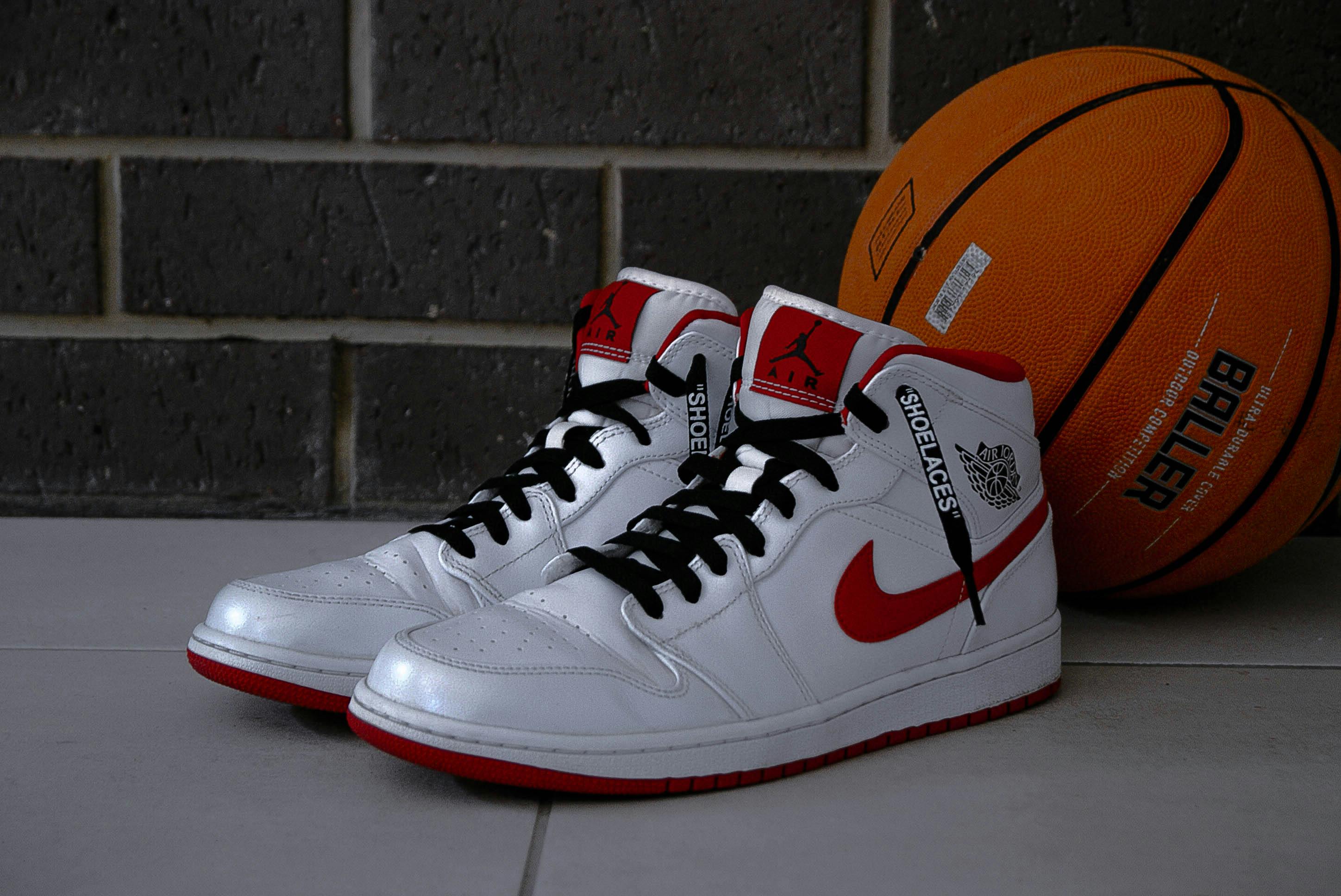
Playing basketball in retros is enticing, but performance limitations make most heritage shoes inadequate picks for competitive hooping in 2026. Heritage shoes use ’80s and ’90s technology — enclosed Nike Air that offers rudimentary shock absorption but lacks the bounce-back and responsiveness of current Zoom Air and React foam. The Air Jordan 11 Retro is the one significant outlier a lot of ballers continue to find usable, because of its carbon fiber spring plate and full-length Air unit, although even it doesn’t reach 2026 court shoes. Grip on retros uses legacy rubber formulas that degrade quicker and offer weaker grip, particularly on dusty recreational courts. Retro materials — dense leather, thick padded collars — introduce considerable weight, coming in at 16-18 ounces against 13-14 for modern performers. Findings in the British Journal of Sports Medicine has shown that external ankle support from high-tops is less effective than intrinsic ankle strength. Keep your retros for casual wear and buy purpose-built basketball shoes for the court.
Choosing the Right Jordan for Your Play Style
Choosing the ideal shoe calls for honest analysis of your playing style, position, and court conditions. Backcourt players relying on speed should focus on light sneakers with springy forefoot cushioning — the Tatum 3 excels here at under 13 ounces with Zoom Air forefoot cushioning. Wings and versatile forwards require balanced cushioning for attacking the rim and pull-up jumpers — the AJ38 and AJ37 fill this job brilliantly. Big men should explore the Luka 3, which features outstanding balance during rebounding without giving up cushioning. Hardwood players can choose grippier rubber compounds for indoor court traction, while outdoor players should look for tougher, more resilient rubber. Past injuries should guide your selection — weak ankles benefit from wide-base shoes, knee concerns call for top-level cushioning. Try shoes in-store if possible, running through basketball movements like slides and quick stops to evaluate real-world feel.
Taking Care Of Your Performance Jordans
Court hooping shoes endure heavy use, and appropriate care stretches performance life by months. Scrub the outsole after every playing session with a stiff brush and lukewarm water to unclog traction grooves — filled grooves are the chief reason sneakers lose grip. Give shoes to dry naturally fully between wears, which takes 12-24 hours, because residual wetness weakens midsole foam and fosters bacteria that cause odor. Rotate between at least two pairs if you compete more than twice weekly, as this lets midsole foam completely decompress between uses. Replace court Jordans after roughly 75-100 hours of play time — midsole cushioning deteriorates silently long before traction exhibit visible wear. Store at room temperature away from heat sources that speed up midsole deterioration. These routines aren’t just about longevity — they’re about injury prevention, because degraded foam leads to stress fractures, arch inflammation, and ankle sprains.
For the full Jordan court shoe range, visit the Jordan Brand basketball collection on Nike.com.